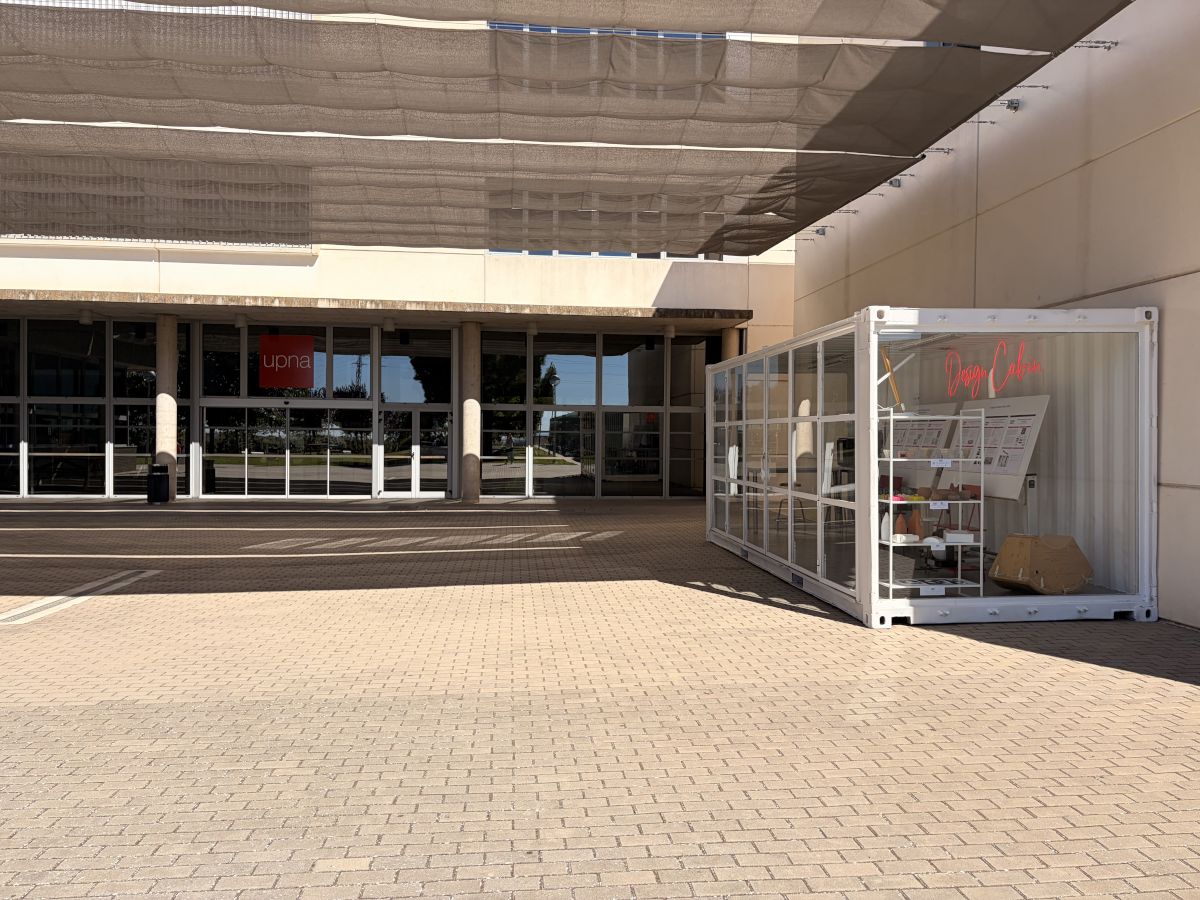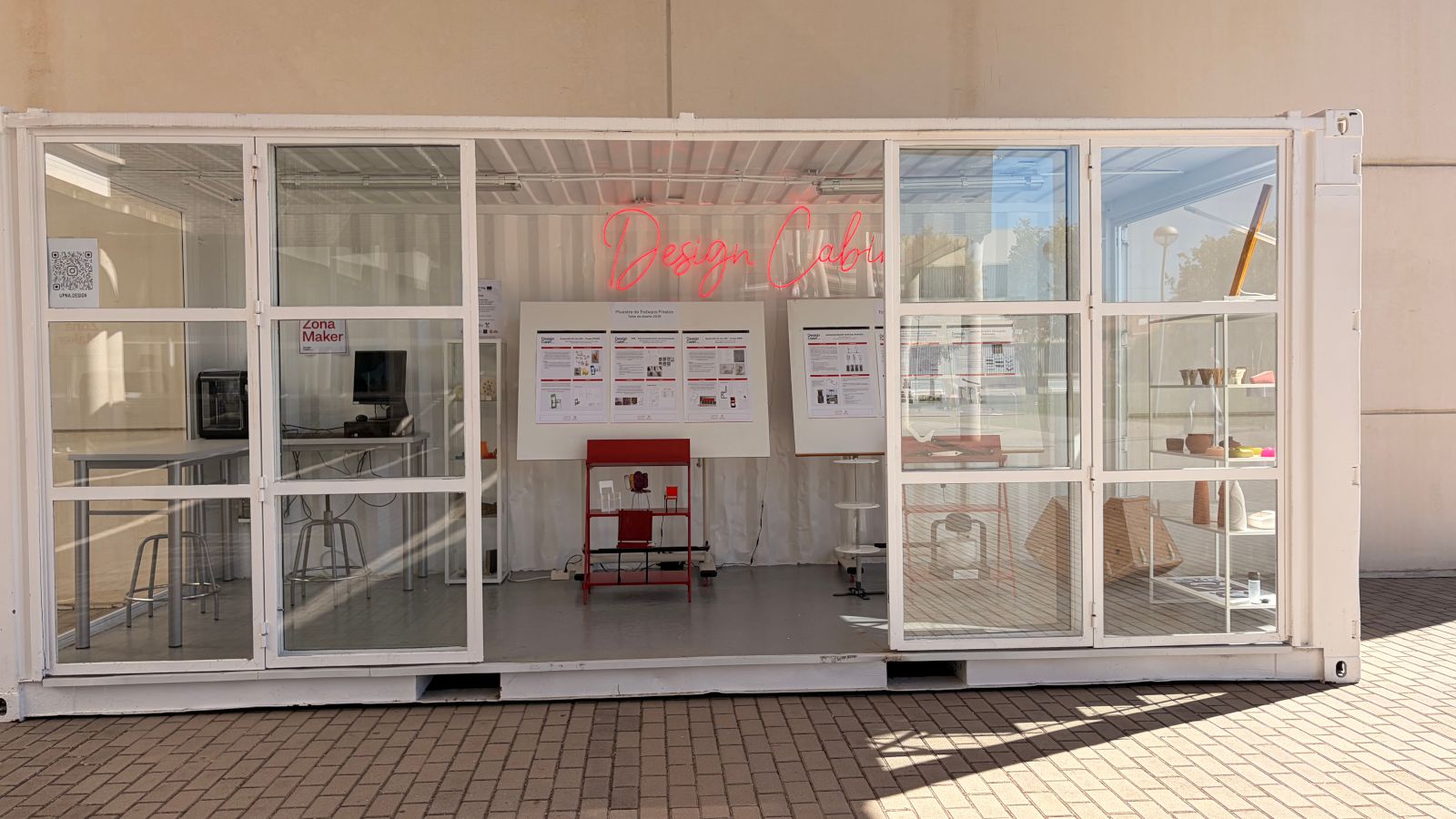
UPNA DesignCabin is a mobile infrastructure for scientific, technological and educational outreach promoted by the Tudela Campus of the Public University of Navarre. Conceived as an interactive and travelling exhibition space, it brings students, professionals and the general public closer to the processes involved in product development, from the early design stages to manufacturing through advanced technologies.
In this context, DesignCabin is also becoming one of the dissemination spaces for the European SURFAV project, funded by the European Commission, making it possible to present the scientific and technological advances being developed within the project in an accessible way. Through this space, visitors will be able to learn about SURFAV’s objectives, the technologies used, the results achieved and its contribution to the development of innovative solutions for advanced and sustainable manufacturing.
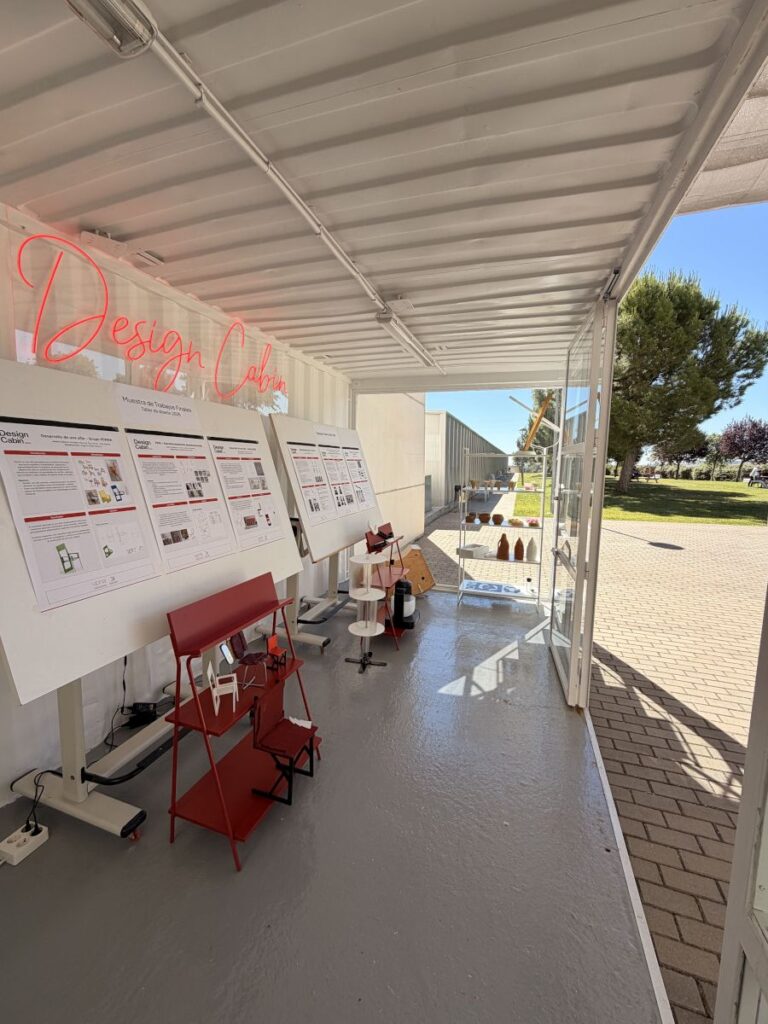
The initiative was created with the aim of giving visibility to the research, innovation and teaching activities carried out in the fields of design and engineering, becoming a meeting point between the university and society. Through thematic exhibitions, technological demonstrations and practical experiences, visitors can discover how tools such as computer-aided design, 3D scanning and additive manufacturing are transforming sectors as diverse as automotive, health, energy, construction and manufacturing.
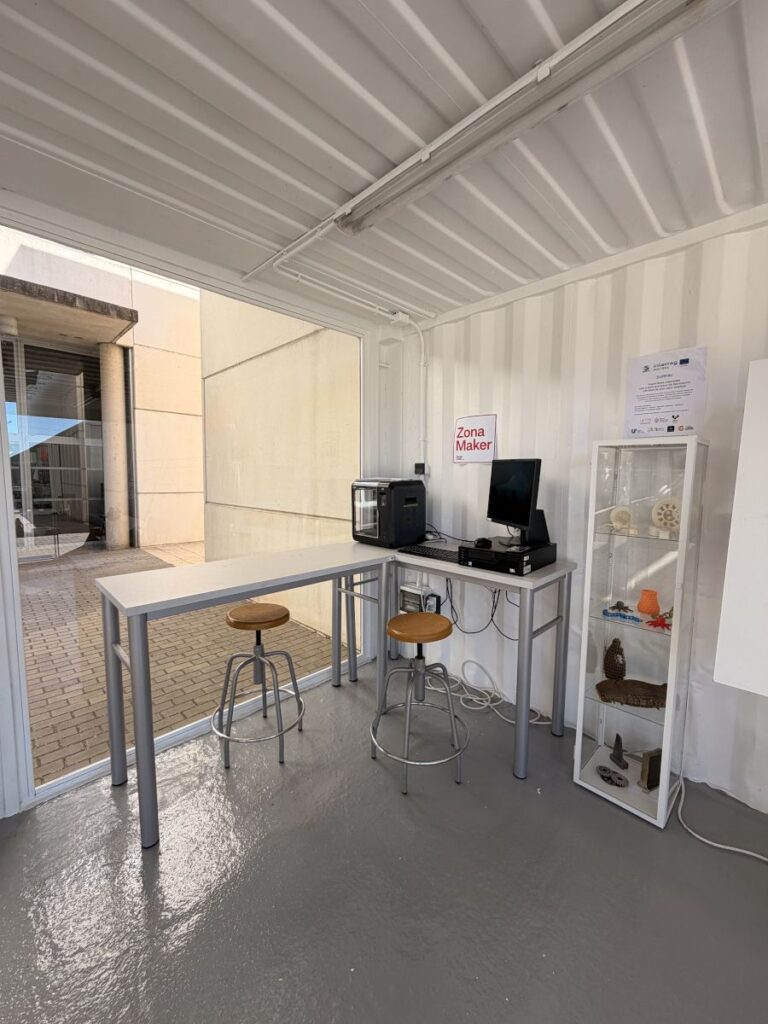
One of the most representative areas of DesignCabin is the Maker Zone, designed to allow visitors to experiment directly with digital design and manufacturing technologies. This space is equipped with specific tools for CAD modelling, 3D scanning, 3D printing and materials analysis, enabling a practical understanding of the complete product development process. It also exhibits prototypes, functional parts and results from both research projects and academic work carried out at the Public University of Navarre.
Throughout the academic year, DesignCabin will host a continuous programme of outreach and training activities linked to the work of the Tudela Campus. These include participation in the European Researchers’ Night, Science Week, the University Open Days and various STEM guidance activities. The space will also support workshops and practical activities developed within the subjects of the Degree in Mechanical Design Engineering, helping to disseminate student projects and bring the reality of engineering closer to future students.
The exhibition programme will be renewed periodically to showcase both research results and outstanding academic projects. During the month of June, coinciding with graduation ceremonies, projects developed by students during the second semester will be exhibited. In September, on the occasion of the Open Days, DesignCabin will act as a showcase for the campus’s educational and technological activity. The months of October and March will be especially dedicated to the exhibition of research projects, including the advances of the European SURFAV project, where prototypes, technological developments, experimental results and the main scientific contributions achieved by the consortium will be presented. In January, the best projects completed by students during the first semester of the academic year will be displayed.
The launch of UPNA DesignCabin has been made possible thanks to the support of different initiatives aimed at promoting scientific outreach and research. We would like to especially acknowledge the funding received through the Scientific Culture Unit (UCC) of the Public University of Navarre via the Design Truck project, whose objective is to bring science, technology and innovation closer to society through outreach and interactive activities. DesignCabin is also supported by the European SURFAV project, funded by the European Commission, which promotes research, innovation and cross-border collaboration in the field of advanced manufacturing and sustainable technologies. Thanks to this support, the exhibition space will help bring the project’s results closer to the public, fostering knowledge transfer and the dissemination of the scientific and technological impact generated by SURFAV.